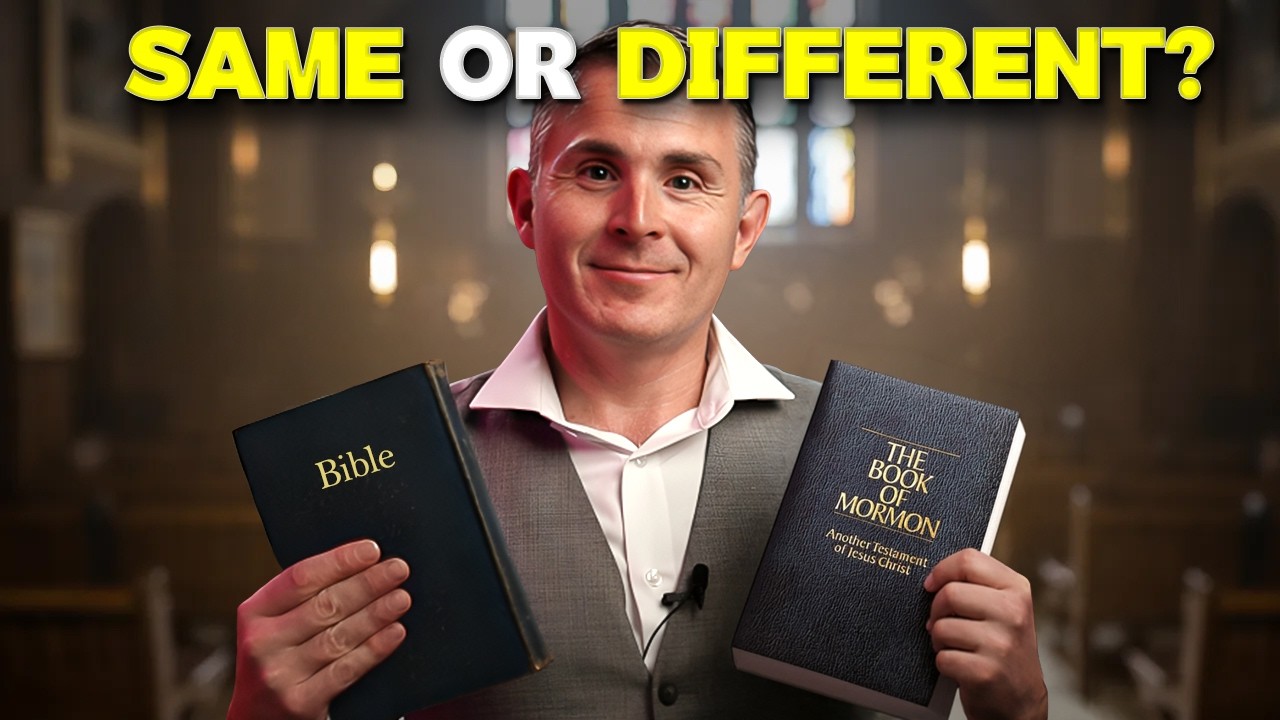
Is reading the Book of Mormon a sin? The answer depends on how we understand biblical teachings about sin, scripture, false doctrine, and testing religious claims. Rather than assuming the answer, it is useful to examine the relevant passages and consider what the Book of Mormon actually teaches.
What Does the Bible Say Sin Is?
The Bible gives several descriptions that can help define sin. These include breaking God’s law, knowingly failing to do what is right, acting without faith, and participating in unrighteousness.
- Breaking God’s law: 1 John 3:4 describes sin as the transgression of God’s law.
- Knowing the right thing and refusing to do it: James 4:17 teaches that knowing to do good and not doing it is sin.
- Acting without faith: Romans 14:23 states that “whatsoever is not of faith is sin.”
- Unrighteousness: 1 John 5:17 says that “all unrighteousness is sin.”
Using these principles, an important question emerges: Does simply reading the Book of Mormon violate God’s law, prevent someone from doing what is right, require them to act without faith, or lead them toward unrighteousness?
Does the Bible Forbid Additional Scripture?
One passage sometimes raised in opposition to additional scripture is Revelation 22:18–19, where John warns against adding to or taking away from “the words of the book of this prophecy.”
At first glance, this may appear to prohibit any scripture beyond the Bible. However, the passage specifically refers to “this book of this prophecy.” Revelation was originally a distinct work of revelation, and the Bible as a complete collection had not yet been compiled when John wrote it.
A similar warning appears in Deuteronomy 4:2, where Moses commands Israel not to add to or take away from the words he had given them. If that statement were interpreted as a prohibition against all future scripture, much of the Bible itself would be excluded because it came after Moses.
This raises an important interpretive question: Are these passages prohibiting additions to the specific revelation being addressed, or are they establishing a permanent prohibition against any future revelation from God? Christians answer that question differently.
What About the Warning Against a “Different Gospel”?
Paul gives another frequently cited warning in Galatians 1:8: anyone preaching a gospel contrary to the one the Galatians had received was to be rejected.
The important question, then, is not simply whether another religious book exists. It is whether its teachings contradict the gospel of Jesus Christ.
According to the transcript, the central teachings Paul emphasizes include:
- Jesus Christ is the Son of God.
- Salvation comes through Jesus Christ.
- Faith and repentance are essential.
- Jesus Christ died and was resurrected.
To determine whether the Book of Mormon presents a different gospel, a person would need to examine its actual teachings rather than deciding based solely on its existence.
Does the Bible Say There Is No More Scripture?
Another argument comes from the idea commonly known as sola scriptura, the Protestant teaching that Scripture is the ultimate authority for Christian faith and doctrine.
Paul writes in 2 Timothy 3:16–17 that Scripture is inspired by God and useful for teaching, correction, and instruction in righteousness. This passage strongly affirms the value and sufficiency of Scripture for teaching God’s people.
However, the passage itself does not explicitly state that God can never reveal additional scripture. The interpretation of whether the biblical canon is permanently closed is a theological question on which Christian traditions differ.
What Does the Bible Say About Multiple Witnesses?
The Bible also contains a principle of establishing truth through multiple witnesses. Paul writes, “In the mouth of two or three witnesses shall every word be established.”
The New Testament itself contains multiple accounts and testimonies concerning Jesus Christ. The Gospels and writings of the apostles provide different witnesses to His life, teachings, death, and Resurrection.
From a Latter-day Saint perspective, the Book of Mormon is presented in a similar way: as another witness of Jesus Christ rather than a replacement for the Bible.
What About Jesus’ “Other Sheep”?
In John 10:16, Jesus says, “Other sheep I have, which are not of this fold.” Christians have interpreted this passage in different ways. One common interpretation identifies the other sheep with Gentiles who would later receive the gospel through the apostles.
The Book of Mormon offers another interpretation, teaching that some of these “other sheep” were people in the Americas who would also hear Christ’s teachings.
Whether that interpretation is convincing is something readers can investigate by comparing the Book of Mormon’s teachings with the Bible.
Test Religious Claims for Yourself
The New Testament encourages believers to examine and test what they are taught. Paul tells the Thessalonians, “Prove all things; hold fast that which is good” (1 Thessalonians 5:21).
That principle can also apply to the Book of Mormon. Instead of deciding whether it is good or bad without reading it, a person can examine its teachings and compare them with Scripture.
Questions worth considering include:
- What does the Book of Mormon teach about Jesus Christ?
- Does it encourage faith, repentance, and righteous living?
- Does it contradict or complement biblical teachings?
- What does it teach about salvation?
- Does reading it lead you toward or away from God?
So, Is It a Sin to Read the Book of Mormon?
Simply reading the Book of Mormon is not identified in the Bible as a sin. The more significant question is what a person does with what they read and whether the teachings they accept are consistent with their understanding of God’s truth.
For Latter-day Saints, the Book of Mormon is intended to be another testament of Jesus Christ. Other Christians may disagree with its origins, authority, or interpretation of Scripture. Those differences are best examined by reading the text, comparing its teachings with the Bible, and considering the relevant theological arguments.
Ultimately, someone who wants to understand the Book of Mormon does not have to decide what it teaches without examining it. The biblical principle to “prove all things” provides a useful starting point: read it, study its claims, compare its teachings with Scripture, and determine what you believe based on that examination.