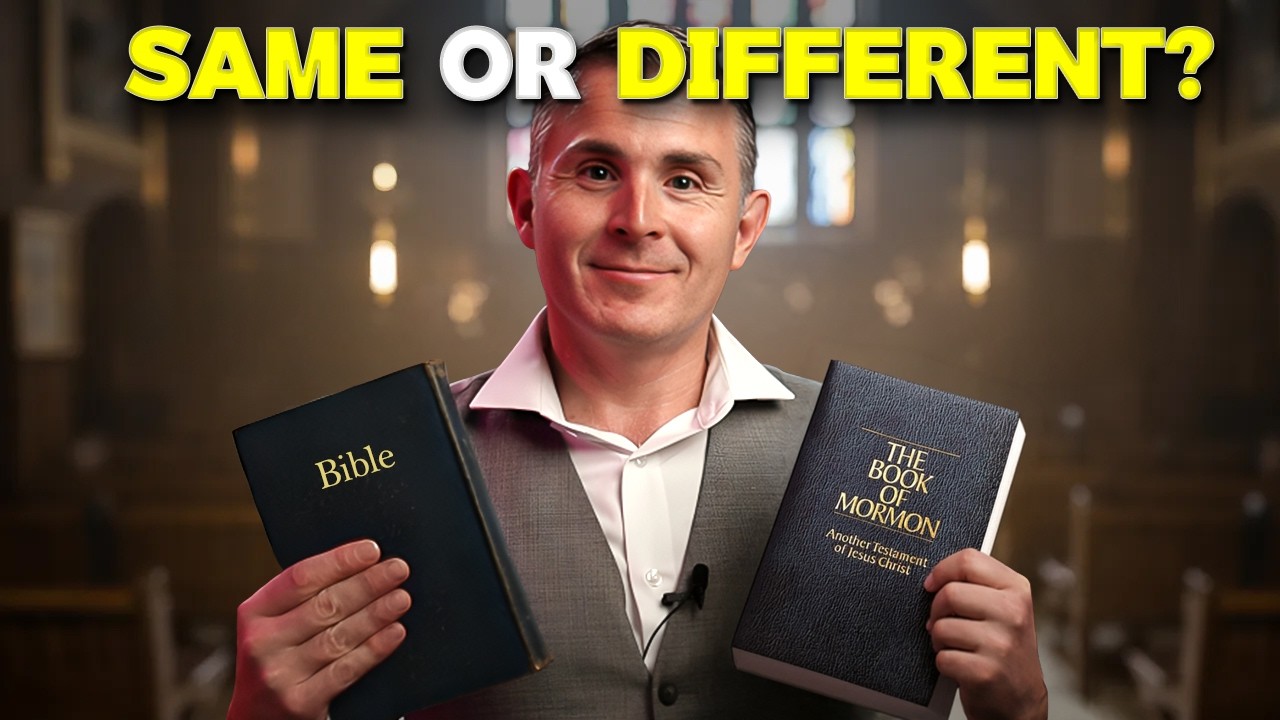
The Book of Mormon vs Bible comparison raises many questions for those exploring Christianity and Latter-day Saint beliefs. While both books testify of Jesus Christ, they differ in their history, purpose, and how they were preserved. Understanding those differences begins with understanding how God reveals scripture.
Rather than comparing verses immediately, it helps to look at the biblical pattern of revelation. Throughout history, God has spoken through prophets, who recorded His word for future generations.
How God Reveals Scripture
The Bible repeatedly shows the same pattern: God reveals His will to prophets, prophets teach the people, and individuals choose whether to accept or reject that message.
As Amos declared:
“Surely the Lord God will do nothing, but he revealeth his secret unto his servants the prophets.”
This pattern appears throughout both the Old and New Testaments. God speaks, prophets testify, and people decide whether to follow.
Jesus also acknowledged that prophets were often rejected:
“O Jerusalem, Jerusalem, thou that killest the prophets, and stonest them which are sent unto thee.”
Although prophets recorded God’s word, scripture itself recognizes that not every event or revelation was preserved.
John concluded his Gospel by writing:
“There are also many other things which Jesus did, the which, if they should be written every one, I suppose that even the world itself could not contain the books that should be written.”
The Bible itself points to writings and prophetic records that are no longer available today.
Prophets Pointed to Jesus Christ
From the beginning, prophets testified of the coming Messiah. Adam, Moses, Isaiah, and many others taught about Jesus Christ long before His birth.
Paul later explained that the Law of Moses was designed to prepare people for Christ:
“Wherefore, the law was our schoolmaster to bring us unto Christ.”
Isaiah also gave one of the clearest prophecies about the Savior:
“For unto us a child is born… and his name shall be called Wonderful, Counsellor, The mighty God.”
Around 600 BC, the prophet Lehi likewise warned Jerusalem to repent and testified of the coming Messiah. According to the Book of Mormon, many rejected his message and sought to take his life.
God Often Leads His People to Safety
Scripture records several occasions when God directed faithful people away from widespread wickedness.
- Noah was commanded to build the ark before the Flood.
- Moses led Israel out of Egypt during the Exodus.
- Lehi and his family were led from Jerusalem before its destruction.
The Book of Mormon records three separate groups who were led to a promised land: the Jaredites, Lehi’s family, and the Mulekites. Their histories form the foundation of the Book of Mormon record.
Like the Bible, these records focus on prophets who testified of Jesus Christ and His role in God’s plan of salvation.
The Mission of Jesus Christ
Both the Bible and the Book of Mormon teach that Jesus Christ came to provide salvation through His Atonement.
John wrote:
“For God so loved the world, that he gave his only begotten Son.”
The Book of Mormon similarly teaches that Christ experienced every pain and affliction so He could understand and help His people.
Both books present Jesus Christ as the central figure of God’s plan and the source of redemption for all who come unto Him.
Why Another Testament Was Needed
After Christ’s resurrection, the apostles spread the gospel throughout the world. Over time, however, many apostles were killed, and the New Testament warns that a falling away would occur.
Paul wrote:
“The day shall not come, except there come a falling away first.”
He also warned that many would turn away from sound doctrine.
The Book of Mormon describes this period by stating that “many plain and precious things” were taken away. According to its teachings, this explains why additional scripture was later needed to clarify and restore gospel truths.
Book of Mormon vs Bible: How They Were Preserved
One of the biggest differences between the Book of Mormon vs Bible is how each record was preserved.
The Bible was written by many prophets over thousands of years and passed through generations of copying, translation, and preservation.
The Book of Mormon describes a different process. According to its account, the prophet Mormon compiled centuries of prophetic records into one volume. After his death, his son Moroni completed the record and buried it until it was later revealed to Joseph Smith.
According to Joseph Smith’s account, God called him as a prophet, and Moroni directed him to the buried record. Joseph Smith then translated the plates into English, producing the Book of Mormon as another testament of Jesus Christ.
How the Book of Mormon Explains Repentance
From that moment, the guilt was gone and the burden was lifted. Repentance is not simply turning away from sin—it is turning toward Jesus Christ and being changed through Him.
The Book of Mormon illustrates this through Enos, who described his sincere search for forgiveness:
“My soul hungered, and I kneeled down before my Maker, and I cried unto him in mighty prayer and supplication for mine own soul.”
After his heartfelt prayer, Enos received this answer:
“There came a voice unto me saying, ‘Enos, thy sins are forgiven thee, and thou shalt be blessed.'”
When Enos asked how this forgiveness was possible, the Lord replied:
“Because of thy faith in Christ. Therefore, go to; thy faith hath made thee whole.”
The Book of Mormon presents repentance as more than remorse. It is a process of coming to Jesus Christ, receiving forgiveness, and experiencing peace and lasting change.
A Mighty Change of Heart
Jesus taught obedience in the Bible:
“If ye love me, keep my commandments.”
He also warned against merely appearing righteous outwardly:
“Woe unto you, hypocrites, for ye are like unto whited sepulchres, which indeed appear beautiful outward, but are within full of uncleanness.”
The Book of Mormon emphasizes that God desires inward transformation, not simply outward behavior.
King Benjamin’s people declared:
“The Spirit of the Lord Omnipotent has wrought a mighty change in us, or in our hearts, that we have no more disposition to do evil, but to do good continually.”
Rather than focusing only on keeping rules, the Book of Mormon teaches that Jesus Christ changes the heart.
It also explains how that transformation occurs:
“They did humble themselves and did wax stronger and stronger in their humility, even to the purifying and the sanctification of their hearts.”
Transformation comes as individuals humble themselves before God and allow Him to sanctify them.
Why Jesus Was Baptized
The Bible records that Jesus Himself was baptized. When John the Baptist hesitated, Jesus responded:
“John forbad him, saying, ‘I have need to be baptized of thee.’ And Jesus answering said, ‘Suffer it to be so now, for thus it becometh us to fulfill all righteousness.'”
The Book of Mormon explains why Jesus chose baptism even though He was without sin:
“Notwithstanding he being holy, he showeth unto the children of men that he humbleth himself before the Father and witnesseth unto the Father that he would be obedient unto him.”
His baptism demonstrated humility, obedience, and perfect submission to the Father’s will.
The Book of Mormon then extends that invitation to everyone:
“Whoso believeth in me and is baptized, the same shall be saved.”
It also teaches that baptism is a personal covenant made with understanding and accountability.
“Little children have no need of repentance, neither baptism. For it is awful wickedness to deny the pure mercies of God unto them.”
Rather than being simply a religious ritual, baptism is presented as a conscious decision to follow Jesus Christ.
The Holy Ghost and Personal Revelation
The Bible describes the Holy Ghost as a teacher and guide.
Jesus promised:
“The Comforter, which is the Holy Ghost, shall teach you all things and bring all things to your remembrance.”
He also said:
“When He, the Spirit of truth, is come, He will guide you into all truth.”
The Book of Mormon expands upon these teachings by emphasizing that this guidance is available personally to every individual.
“The Holy Ghost will show unto you all things what you should do.”
It also teaches:
“By the power of the Holy Ghost, you may know the truth of all things.”
Rather than merely learning information, believers are invited to receive personal confirmation through the Holy Ghost.
The Book of Mormon also describes how the Spirit commonly communicates:
“It was not a voice of thunder, but a still voice of perfect mildness, as if it had been a whisper.”
These passages emphasize that God communicates personally through quiet spiritual impressions, allowing individuals to recognize truth for themselves.
Bringing Greater Clarity to the Gospel
The Bible teaches that God is not the author of confusion, yet sincere Christians often arrive at different interpretations of scripture.
The Book of Mormon presents itself as reinforcing the teachings of Jesus Christ while bringing greater clarity to His gospel.
When the resurrected Christ appears in the Book of Mormon, He declares:
“This is my doctrine, that the Father commandeth all men to repent and believe in me, and whoso believeth and is baptized, the same shall be saved.”
He immediately warns against altering that doctrine:
“Whoso shall declare more or less than this, the same is not of me, but is built upon a sandy foundation.”
The Book of Mormon consistently teaches that truth is not merely debated but revealed through the Holy Ghost.
“By the power of the Holy Ghost, you may know the truth of all things.”
Its stated purpose is to help readers understand the gospel of Jesus Christ with greater clarity while strengthening faith in Him.
An Invitation to Read the Book of Mormon
The Book of Mormon differs from the Bible in its historical setting, the prophets who wrote it, and the peoples whose history it records. At the same time, it presents itself as teaching the same gospel of Jesus Christ while providing additional clarity and testimony.
Readers are invited to study both books together, looking for their shared witness of Jesus Christ and the additional understanding the Book of Mormon claims to provide.
If curiosity has been sparked, one practical invitation is simply to read the Book of Mormon personally and compare its teachings with the Bible.
Missionaries from The Church of Jesus Christ of Latter-day Saints offer free copies of the Book of Mormon and are available to answer questions for anyone interested in learning more.
The invitation is not presented as an argument but as an opportunity to study, pray, and seek a closer relationship with Jesus Christ through personal exploration of scripture.
The Bible and the Book of Mormon are presented as two witnesses of Jesus Christ, inviting readers to seek truth through scripture, prayer, and personal revelation.