If you’ve ever explored Christianity, you’ve probably encountered the claim that there are 30,000—or even 45,000—Christian denominations. But what do those numbers actually mean?
The answer is more complicated than simply counting churches. Different sources can define a “denomination” differently, and many churches that are counted separately may share the same core beliefs while differing in organization, geography, language, worship style, or secondary doctrines.
Why the Number of Denominations Can Be Misleading
The often-repeated numbers of 30,000 or 45,000 can create the impression that Christianity consists of tens of thousands of completely unrelated belief systems. But that isn’t necessarily what those figures represent.
As Pastor Jeff explains in the transcript, some groups counted separately may belong to the same broader theological tradition. For example, numerous Lutheran ecclesiastical organizations may be separated by geography, language, or governance while maintaining substantially consistent Lutheran beliefs.
This distinction changes the question. Instead of simply asking how many denominations exist, it can be more useful to ask how Christianity is organized into major traditions and where their theological differences actually occur.
Core Doctrines and Secondary Doctrines
One way some Christians make sense of denominational diversity is by distinguishing between core doctrines and secondary doctrines.
Core doctrines are understood as beliefs that are essential to Christian identity. Secondary doctrines are beliefs on which Christians may disagree while still recognizing one another as fellow Christians.
For example, Christians may disagree about whether baptism should be practiced for infants or believers who are old enough to make their own profession of faith. They may also differ over predestination, spiritual gifts, church organization, or the continuation of prophecy and speaking in tongues.
These disagreements can be significant, but within this framework they don’t necessarily define whether someone is considered Christian.
What Do Many Christian Traditions Have in Common?
Despite substantial differences, many major Christian traditions share several foundational beliefs.
- God: Most historic Christian traditions affirm one God understood as Father, Son, and Holy Spirit, commonly described as the Trinity.
- Jesus Christ: Christians generally affirm that Jesus is the Son of God, that He lived, died, and was resurrected, and that salvation is available through Him.
- Scripture: Christian traditions generally regard the Bible as sacred Scripture and a central source for understanding God’s will.
- Salvation: Christians generally teach that humanity needs redemption and that salvation is connected to Jesus Christ.
Exactly how these doctrines are understood, however, can differ considerably among Christian traditions.
Major Streams Within Protestant Christianity
Rather than viewing every individual church as a completely separate theological system, the transcript describes several broad Protestant streams. These categories can overlap, and different people may classify churches somewhat differently.
- Reformed: Often emphasizes God’s sovereignty and doctrines such as predestination.
- Baptist: Commonly emphasizes believer’s baptism and the authority of the local congregation.
- Methodist and Holiness: Often emphasizes personal transformation and holy living.
- Pentecostal and Charismatic: Places particular emphasis on spiritual gifts, including prophecy and speaking in tongues.
- Anglican and Episcopalian: Often emphasizes liturgy and continuity with historic Christianity.
- Lutheran and Presbyterian: Each has distinct theological frameworks and historical traditions.
- Non-denominational: Many non-denominational churches draw substantially from existing Baptist, Pentecostal, or other Protestant traditions.
From this perspective, the enormous number of individual churches can be understood as expressions of a smaller number of major theological traditions.
Christianity Has Always Included Theological Disagreement
Looking at Christian history adds another layer to the question. Christianity did not develop as one completely uniform tradition in which every theological question was settled from the beginning.
Major disagreements emerged during the earliest centuries of Christianity. One important dispute concerned the nature of Jesus Christ and His relationship to God the Father.
Arius argued that Christ was the Son of God but was created by the Father and therefore not eternal in the same way as the Father. Athanasius defended the position that Christ was fully divine and eternal.
These disagreements became significant enough that Emperor Constantine convened the Council of Nicaea in 325 AD. The council produced a statement of faith that became known as the Nicene Creed, using precise language to address questions about the relationship between the Father and the Son.
The development of Christian creeds illustrates an important point: what later generations describe as “core doctrine” was shaped through centuries of discussion, disagreement, councils, and attempts to articulate Christian belief precisely.
From Early Divisions to Modern Denominations
Christianity subsequently developed into multiple major traditions. The divisions between ancient Christian communities, the East-West split commonly associated with the Great Schism of 1054, and the Protestant Reformation of the 1500s all contributed to the diverse Christian landscape that exists today.
These traditions share important beliefs while differing over questions of authority, doctrine, worship, church structure, and the interpretation of Scripture.
That history makes the question of denominations more complicated than simply counting organizations. It also raises deeper questions about how Christians determine which beliefs are fundamental and how theological disagreements should be resolved.
Who Decides What Is “Core”?
Perhaps the more important question isn’t how many denominations exist, but who determines which doctrines are essential to Christianity.
Many Christians look to the Bible as their primary or final authority and understand Christian doctrine through Scripture and established tradition. Others place greater emphasis on councils, historic creeds, church authority, continuing revelation, or combinations of these sources.
The differences become particularly significant when Christians interpret the same biblical passages in different ways. The question then becomes not merely what Scripture says, but how its meaning and authority should be understood.
A Latter-day Saint Perspective
From the perspective presented in the transcript, The Church of Jesus Christ of Latter-day Saints approaches these questions through the belief that God continues to reveal truth through prophets.
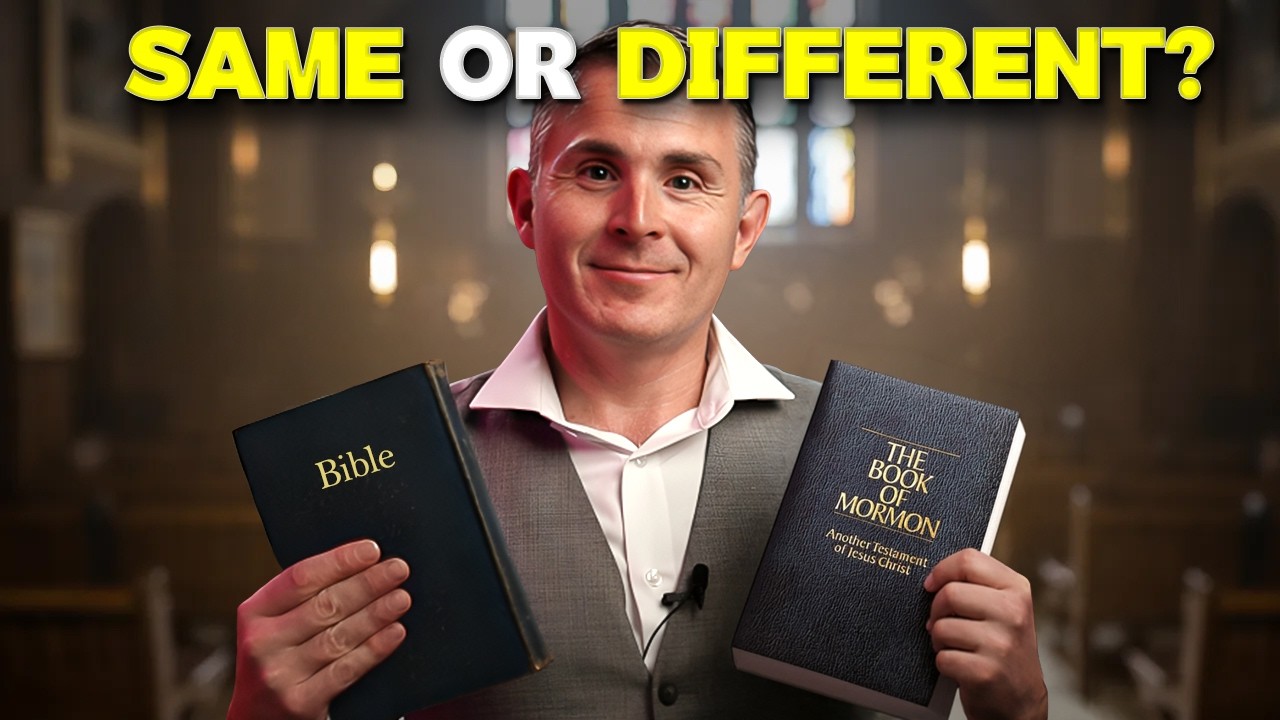
This perspective includes a belief that Joseph Smith was called as a prophet in the early 1800s and that God restored additional scripture, including the Book of Mormon. Latter-day Saints understand this restoration as providing additional clarification about God, Jesus Christ, salvation, revelation, and humanity’s relationship with God.
This represents a significant theological difference from Christian traditions that understand the biblical canon and historic creeds as the established boundaries of Christian doctrine.
Look Beyond the Number
So, how many Christian denominations are there? The answer depends heavily on how “denomination” is defined and counted.
More importantly, the number alone doesn’t tell the whole story. Christianity contains both substantial areas of shared belief and meaningful disagreements about doctrine, authority, worship, and interpretation.
Understanding those differences—and the history behind them—can be more illuminating than focusing on a single number. Instead of asking only how many denominations Christianity has, we can ask deeper questions: What do Christians agree on? Where do they disagree? Where did those doctrines come from? And how do different Christians determine what is true?
Those questions can lead to a much richer understanding of Christianity and its many traditions.