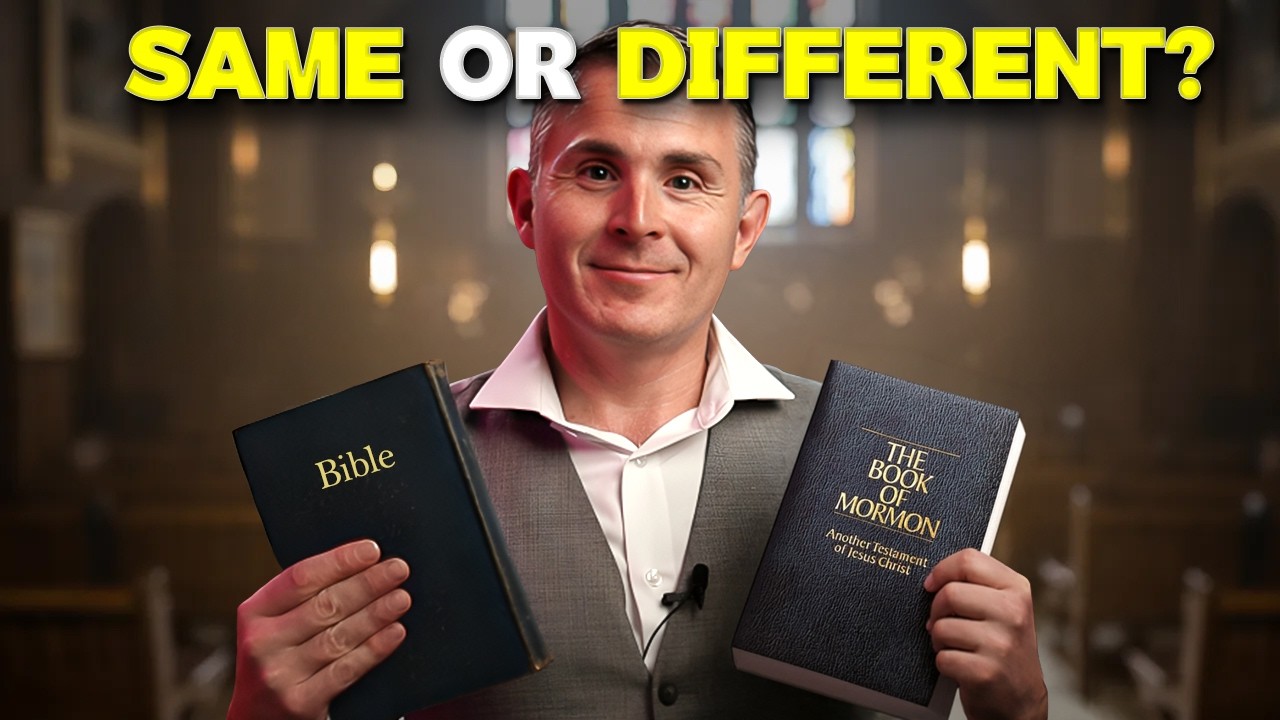
Is the Book of Mormon racist? It is a serious question, especially because some passages refer to skin color in ways that can be deeply troubling to modern readers. The best way to approach the question is not to ignore those passages, but to read them in their historical and literary context and then consider the broader message of the book.
The Difficult Passages
Some of the most controversial passages appear early in the Book of Mormon, in the account of the family of Lehi. After a division between Nephi and his brothers, the text describes a “cursing” associated with rebellion against God and refers to a “skin of blackness.” Later passages describe the curse being removed and the skin becoming “white.”
These verses have understandably raised difficult questions. They should not be dismissed or ignored. At the same time, the story itself presents the conflict primarily in terms of rebellion, violence, covenant faithfulness, and repentance. The people involved are described as members of the same extended family rather than as unrelated racial groups.
Most importantly, the Book of Mormon does not present racial superiority as a virtue. In fact, several passages directly challenge the idea that a person’s worth before God is determined by appearance, ancestry, or ethnicity.
“All Are Alike Unto God”
One of the clearest statements appears in 2 Nephi 26:33, which teaches that God “inviteth them all to come unto him and partake of his goodness” and “denieth none that come unto him, black and white, bond and free, male and female.” It concludes with the statement that “all are alike unto God.”
This is a foundational principle in the Book of Mormon: God’s invitation is universal. Race, social position, gender, or background does not determine who can come unto Christ.
The book also describes righteous communities as caring for people without showing favoritism. In Alma 1:30, believers are praised for giving generously to those in need regardless of whether they were members of the church, wealthy or poor, young or old, male or female, bond or free.
Judging People by Skin Color Is Condemned
The Book of Mormon also records occasions when people themselves became prejudiced and were corrected for it. In Jacob 3:9, the Nephites are commanded not to revile others because of the “darkness of their skins” and are told to remember their own shortcomings.
This is significant because it shows the narrative condemning prejudice rather than presenting it as an ideal. The people who considered themselves spiritually superior were specifically challenged when they used differences in appearance as a reason to look down on others.
Righteousness Is Not Determined by Ancestry
Another recurring theme is that spiritual faithfulness can change from one generation or group to another. The Book of Mormon does not consistently portray one lineage as righteous and another as wicked.
At different points in the narrative, Nephites become wicked while Lamanites become faithful. The roles repeatedly reverse. This undermines the idea that righteousness is inherently connected to ancestry or skin color.
The book instead emphasizes repentance and faith in Jesus Christ. In 2 Nephi 30:2, for example, covenant status is connected to repentance and belief in Christ rather than ethnicity.
Former Enemies Become “Brethren”
One of the strongest examples of this principle occurs when a group of former enemies undergoes profound repentance. Rather than being permanently defined by their ancestry or past actions, they are accepted, protected, and given an inheritance in the land of Jershon.
Their transformation illustrates an important Book of Mormon principle: people are not required to remain defined by their past. Through repentance and faith in Christ, former enemies can become brothers and sisters.
The book ultimately describes a society in which the divisions between groups disappear:
“There were no robbers nor murderers. Neither were there any Lamanites, nor any manner of -ites; but they were in one, the children of Christ.”
The ideal is not permanent separation between groups. It is unity through Jesus Christ.
How Should We Read the Controversial Passages?
A responsible reading should acknowledge that the Book of Mormon contains passages about skin color that can be difficult and uncomfortable. Those passages deserve serious examination rather than being explained away.
At the same time, isolated verses should not be treated as though they represent the entire message of the book. The Book of Mormon repeatedly teaches that God loves all people, that everyone is invited to come unto Christ, that judging others based on appearance is wrong, and that righteousness is not determined by lineage.
Its narrative also repeatedly reverses expectations: the supposedly righteous become wicked, the supposedly wicked repent and become righteous, and former enemies become family.
What Is the Book of Mormon’s Central Message?
The central message of the Book of Mormon is Jesus Christ. Its recurring invitation is to repent, believe in Christ, enter into a covenant relationship with God, and become spiritually transformed.
That makes the book’s teachings about race part of a much larger message about human worth and discipleship. Its ideal community is one where people stop defining one another by labels and instead see each other as “the children of Christ.”
So, is the Book of Mormon racist? The text contains passages about skin color that are legitimately difficult to understand, and readers should be willing to confront them honestly. But the broader teachings of the book explicitly reject the idea that one group is inherently more valuable than another. It teaches that all are alike unto God, condemns prejudice, calls people to repentance, and ultimately points toward unity through Jesus Christ.
For anyone wrestling with these questions, the most productive approach is to read the passages in context, examine the broader narrative, and consider the book’s repeated teachings about equality, repentance, and the universal invitation to come unto Christ.