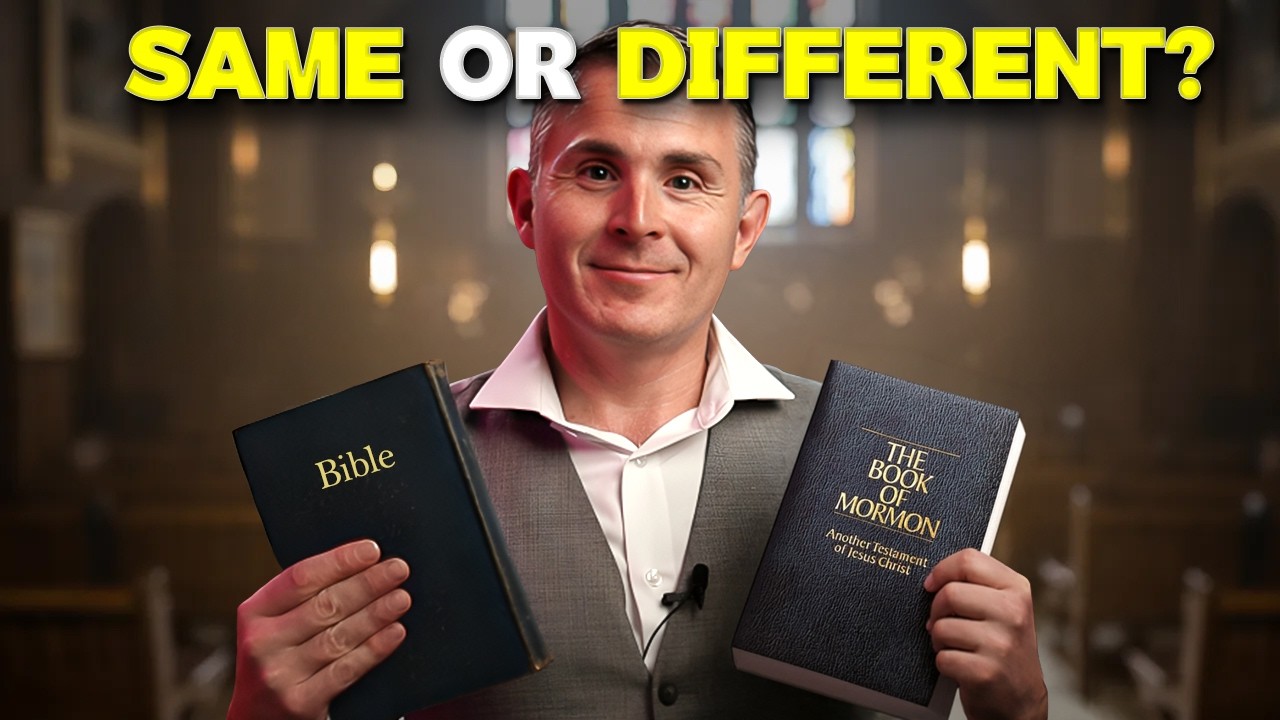
Many people ask an important question: What does the Bible say about the Book of Mormon? While the Book of Mormon is often unfamiliar to those outside the Latter-day Saint tradition, its purpose is not to replace the Bible but to stand alongside it. Both books claim to be scripture written by ancient prophets, and both testify of Jesus Christ as the Son of God. When examined carefully, the Bible itself contains prophecies and teachings that align with the coming forth of an additional witness of Christ.
What Is the Book of Mormon?
The Book of Mormon is a record of God’s dealings with ancient peoples in the Americas. Its narrative begins around 600 BC and continues until about AD 400, covering roughly a thousand years of history. These records were written by prophets and preserved through generations, often on metal plates.
A prophet named Mormon later abridged these extensive records into a single volume, which is why the book bears his name. Like biblical prophets such as Moses, Isaiah, and Jeremiah, Mormon testified of Jesus Christ. Latter-day Saints worship Jesus Christ, believe in the Old and New Testaments, and accept the Book of Mormon as another testament of Christ that complements the Bible.
Jesus Christ and the “Other Sheep”
In John 10, Jesus describes Himself as the Good Shepherd and speaks of His followers as His sheep. In verse 16, He makes a striking statement:
“And other sheep I have, which are not of this fold: them also I must bring, and they shall hear my voice; and there shall be one fold, and one shepherd.”
Jesus was speaking to Jews in Israel. The “other sheep” were not Gentiles, since Jesus Himself did not personally minister to the Gentiles during His mortal ministry. Instead, after His resurrection, He empowered His apostles to take the gospel to them.
The Book of Mormon records that the resurrected Christ appeared to people in the Americas, identifying them as the “other sheep” He had referenced. This teaching aligns directly with the biblical passage and provides an expanded understanding of Christ’s global ministry.
The Lineage of Joseph in the Old Testament
The Old Testament contains prophecies about the descendants of Joseph, son of Jacob. In Deuteronomy 33 and Genesis 49, Joseph is described as being “separate from his brethren” and as having branches that “run over the wall.” Many interpret this imagery as symbolizing separation by great distance, even across oceans.
The Book of Mormon explains that a group of Israelites led by the prophet Lehi left Jerusalem around 600 BC and traveled to the Americas. Lehi was a descendant of Joseph through Manasseh, and another family traveling with him descended from Ephraim. This lineage aligns with biblical blessings pronounced upon Joseph’s descendants.
Isaiah’s Prophecies of a Sealed Book
Isaiah 29 contains language that many readers find significant when studying the Book of Mormon. Isaiah speaks of a book that is sealed, delivered first to the learned, who cannot read it, and then to the unlearned, who says he is not learned.
According to Latter-day Saint belief, this prophecy parallels the coming forth of the Book of Mormon through Joseph Smith, an uneducated farm boy who translated an ancient record by divine power rather than scholarly learning. Isaiah also describes words that “whisper out of the dust,” a phrase believers associate with an ancient record speaking again to modern readers.
The Stick of Judah and the Stick of Joseph
One of the most direct biblical references is found in Ezekiel 37. The prophet is commanded to take two “sticks”—one for Judah and one for Joseph—and join them together so they become one in his hand.
Traditionally, the “stick of Judah” is understood to represent the Bible, preserved by the Jewish people. The “stick of Joseph” represents a record preserved by Joseph’s descendants. Ezekiel prophesies that these two records will come together, uniting God’s word and helping to gather Israel in the last days.
Believers see the Bible and the Book of Mormon fulfilling this prophecy by standing together as unified witnesses of Jesus Christ.
God Speaks Through Multiple Witnesses
The Bible teaches that truth is established by multiple witnesses. Paul wrote that “in the mouth of two or three witnesses shall every word be established.” The Bible itself is composed of multiple books and prophets, yet Christians accept this plurality as strengthening, not weakening, its authority.
The Book of Mormon claims to be another witness, written by prophets who also testified of Christ. Rather than diminishing the Bible, it affirms its teachings and adds clarity to doctrines such as the Atonement, God’s covenant with Israel, and Christ’s divine mission.
The Book of Mormon on Additional Scripture
The Book of Mormon itself addresses the objection that no further scripture is needed beyond the Bible. It teaches that God has spoken to many nations and will continue to speak according to His will.
This idea is consistent with the biblical portrayal of God as unchanging—one who spoke to prophets anciently and continues to guide humanity. The existence of additional scripture does not contradict the Bible; instead, it reflects the same pattern by which the Bible itself came into existence.
Conclusion
When studied carefully, the Bible contains numerous passages that align with the existence of another record of God’s dealings with His children. From Christ’s reference to “other sheep,” to Isaiah’s sealed book, to Ezekiel’s prophecy of two sticks becoming one, the Bible provides a framework that believers see fulfilled in the Book of Mormon.
Rather than competing with the Bible, the Book of Mormon claims to stand beside it, testifying of Jesus Christ and affirming that God continues to speak to His children. For those willing to study both books together, many find that each enhances the other, offering a clearer and more unified understanding of the gospel of Jesus Christ.